
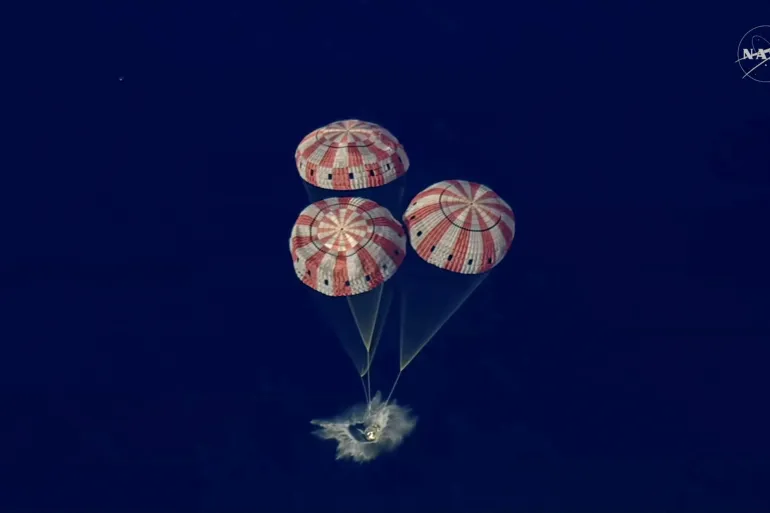

History was just rewritten. Yesterday at 5:07 p.m. PDT, NASA’s Artemis II mission officially concluded as the Orion spacecraft splashed down in the Pacific Ocean. After 10 days in space, the four-person crew—Reid Wiseman, Victor Glover, Christina Koch, and Jeremy Hansen—is safely back on Earth.
Why This Matters
This wasn’t just another flight; it was the first time humans have laid eyes on the far side of the Moon since the Apollo era. During their journey, the crew traveled 252,756 miles from Earth, breaking the record for the farthest human spaceflight previously held by the Apollo 13 mission.
The “Loop” Perspective: Systems in Action
At Loop Media, we talk a lot about unified ecosystems. The Artemis program is the ultimate example of this. Every component—from the SLS rocket’s launch to the precise 23,864 mph atmospheric re-entry—is part of a massive, synchronized infrastructure designed for a single goal: returning humans to the lunar surface.
What’s Next?
- Artemis III (Mid-2027): This will be a “dress rehearsal” in Low Earth Orbit to test the docking systems between Orion and the SpaceX Starship lander.
- Artemis IV (2028): The official target for the next human lunar landing.
Yesterday’s splashdown proves that when the system works, the impossible becomes reachable.
RETURN HOME